Category: Reflections

  • Mercy and the Unforgiving Servant

    Mercy and the Unforgiving Servant

    Going forward, I am going to offer a weekly blog post on our new website. It will be centered around the scripture for our Sunday Gathering. This week we share a parable from the Gospel of Matthew (Matthew 18:21-35) where Jesus calls his followers to show compassion and mercy. It’s the story of a king who wants to settle accounts with his servants. And he confronts one of them who owes him a great deal of money. But since he was not able to pay, the master, following the justice of the day, ordered that he and his wife and his children and all that he had be sold to repay the debt. But the servant begs him for mercy and for more time and help.

    “And the king, having his heart reached, forgives him and lets him go free. But then, this same rescued servant turns around and confronts people who are beholden to him. And he finds out that they, too, have debts owing to him. So he orders them to be taken prisoner, tied up and held captive. When the king heard about this, he was livid because after the mercy he showed to the servant, then the servant turned around and showed heartlessness and wickedness to those under him.” 

    You don’t have to be a scholar to understand this teaching. God is merciful to us every day. We in turn are called to follow this standard. We are to be merciful to others around us. How are we doing by this standard? We see cruelty in our country and throughout the world by people of power. But for people of Christian faith, we are called to follow the example of Jesus every day. Cruelty is all around us. This teaching by Jesus is clear and obvious to us and we find ourselves in this parable every day. Before judging others we are called to search our own souls. Am I acting with mercy and forgiveness? Am I merciful and compassionate? Do I model the mercy of Jesus with others? It may not be an easy standard, but it’s not complicated. Even a rudimentary understanding of the Gospel of Jesus Christ shows us the path to walk and talk. And as we look around our world, it is distressing to find the cruelty and the absence of mercy everywhere. What we can do is model our lives against this clear teaching and be the merciful one.

  • A Thanksgiving Message

    A Thanksgiving Message

    Preparing for Thanksgiving

    When approaching the Scripture, we always ask two questions: What did it mean then and what does it mean now?

    This past Sunday we took a break from our reading of Paul’s Letter to the Romans. We read from his letter in Ephesians Chapter 4. But the theme here carries forward his blunt instructions for living a life according to the Gospel of Jesus. He calls out to all in his hearing reminding them of the fundamental values and instructions for living a life faithful to Jesus. He contrasts new life in Jesus to the wider popular culture and its norms. The common cultural distractions in the Greco Roman world focused on the sensual permissiveness, greed and anger. Sound familiar? Let’s reflect on this teaching ourselves as we prepare to connect with family and friends at Thanksgiving. We commit to gathering with a humble and grateful heart. Who needs my loving attention? How can I feed all who come to our table and also offer food for their souls? Who needs my word of love and encouragement? Thank you Jesus for you life, death, resurrection and promises for us! Have a blessed Thanksgiving holiday!

  • A Reflection on Romans 8

    A Reflection on Romans 8

    When approaching the Scripture ask two questions: What did it mean then and what does it mean now? I am grateful for the content of yesterday’s scripture at The Gathering. We continued with Paul’s message in Romans 8 emphasizing our freedom from the law. The essence of the teaching is that we become perpetually distracted trying to follow the law and the activities that demand our constant attention. We lose focus on what matters, which is faith! It was a challenge for the people in Rome at the time and remains a central issue for us today. And I decided it was distraction away from the simple truth of faith and being consumed with worry and obligations. The essence of the Gospel is to retreat from these distractions and keep our focus on the core simple truth. Faith alone! Thank you Jesus and Paul! Stay focused and at peace in God’s care!

  • The Good Shepherd: What I Learned About Sheep

    The Good Shepherd: What I Learned About Sheep

    Growing up on the East Coast, I naturally had very little exposure to agriculture. I knew it was a massive enterprise, but it seemed far removed from my world—first in Brooklyn, where I was born, and later on Long Island, where I lived. Farming was something that happened “out there,” in distant, rural places. I held a vague admiration for people who worked the land and tended livestock, but it remained a detached curiosity.

    That changed when I was asked to teach on the passage where Jesus calls himself “The Good Shepherd.” The phrase, of course, made sense to me on an intuitive level. I got the general idea. But I quickly realized I had no real understanding of what shepherding—or sheep, for that matter—was all about.

    My curiosity kicked in, and I began learning everything I could about sheep. And let me tell you, it was fascinating—especially now that I live in Indiana, in the heart of agriculture country, surrounded by livestock farms.

    So what did I learn?

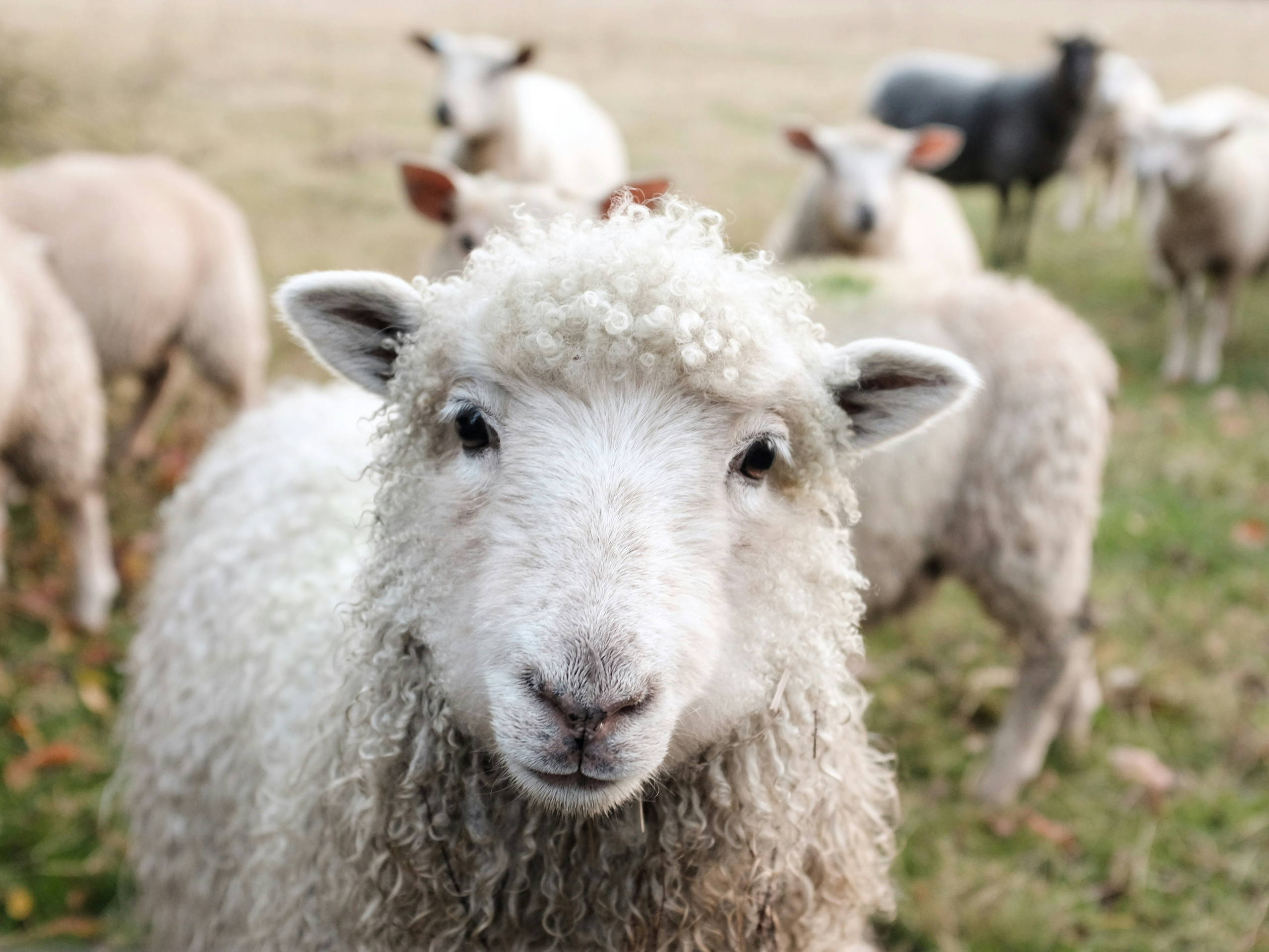
    In the world of sheep, their characteristics are well documented. They’re generally seen as tame and docile. But look closer, and you’ll discover they’re also quite intelligent. Sheep are herd animals—they find safety and comfort in being together. They typically don’t get aggressive unless threatened, and even then, it’s the rams who do most of the reacting. Because of their vulnerability, sheep are frequent targets for predators like wolves and foxes. That’s why they need a protector.

    Enter the Shepherd

    The shepherd is more than just a leader. He’s the guard, the guide, the ever-watchful protector. A good shepherd knows each sheep and is willing to go to any length to protect the flock from harm. Think of the shepherd as the cop on duty, constantly scanning for threats.

    And here’s something surprising I learned: sheep communicate through sensations in their feet. They can feel what’s happening around them. In open pastures, they rely on the shepherd—and often trained dogs—to keep them safe from intruders. It’s a sophisticated system built on trust, protection, and presence.

    So what’s the point?

    In Jesus’ metaphor, we are the sheep. Vulnerable. Prone to wandering. Exposed to all kinds of modern “predators” that would lead us astray or tear at our well-being. But with Jesus as our Shepherd, we’re not alone. We’re watched over. Protected. Guided.

    The message is clear: Stick with the Shepherd—and you’ll be safe from the wolves out there hungry to snatch your soul! Capeesh?